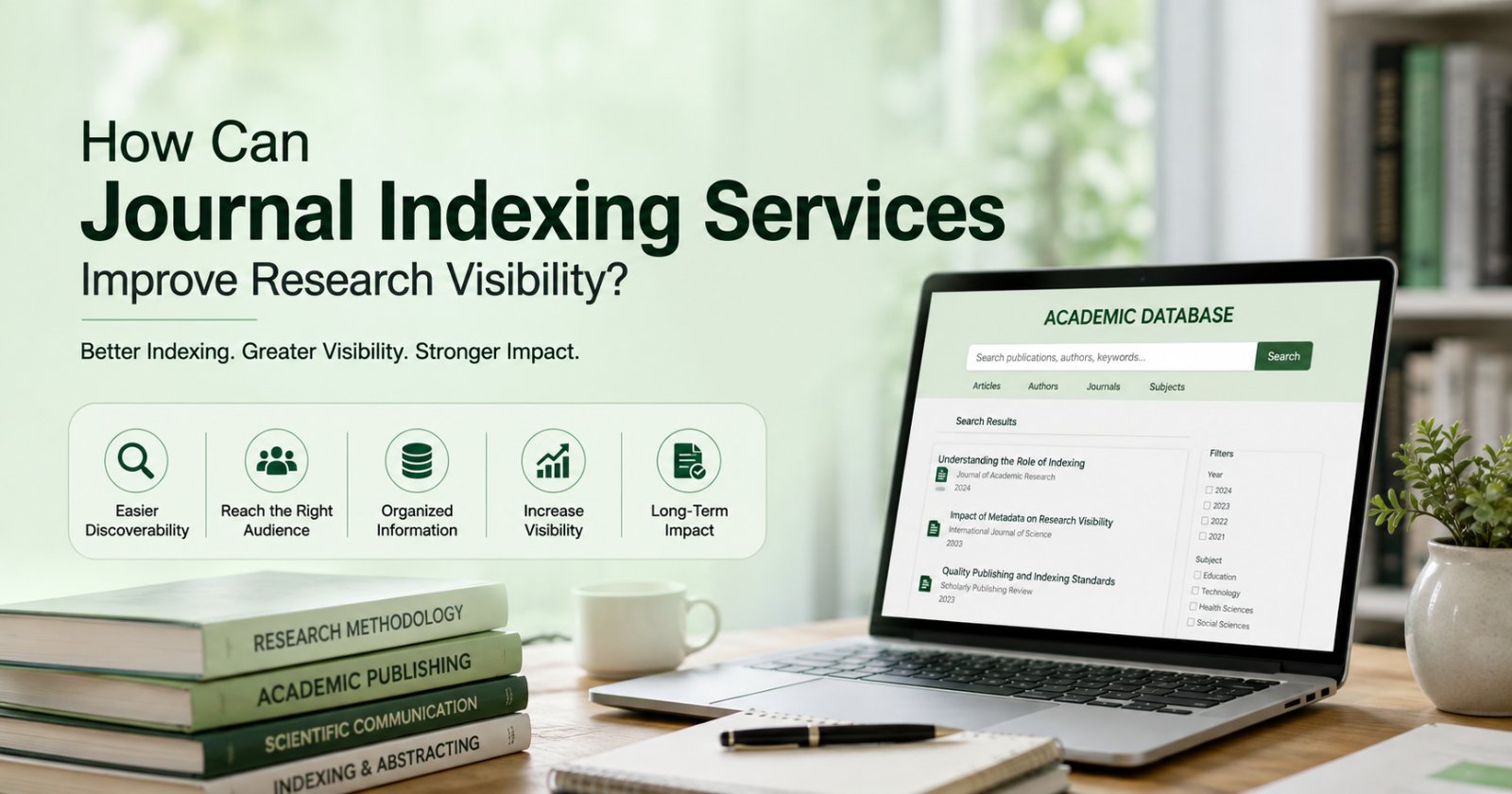
Imagine putting in all that effort into studying and researching a particular topic and then seeing your efforts buried in places where researchers who need them may never find them. If nobody who might benefit from the research can find it, why conduct such important research?
Publishing a research paper is an accomplishment, but there is more beyond that. This is when the journal indexing comes into play. It makes your research visible by including it in credible academic resources and increasing chances for other scholars to read and reference your paper.
However, journal indexing is much more than that. Not only the process itself but also the quality of the journal, editing, metadata, and many more factors matter.
In this blog, we will explore how journal indexing services improve research visibility and help valuable research reach the right academic audience.
What Is Journal Indexing?
Journal indexing refers to the mechanism through which academic journals or their publications are made available in specialised databases where academic works are catalogued.
One can think of an academic database as an organised cataloguing system of a huge library. Rather than going through each journal’s website, one can search on a single platform using different parameters like keywords, authors, subject, title, abstract etc.
In case a person searches for something specific, indexed journal publications might come up along with some other scholarly works. This gives them a greater chance of being found by their actual audience.
However, being indexed should not be treated as an automatic guarantee of journal quality. Different databases have different journal indexing criteria, selection processes, coverage policies, and standards.
Why Does Research Visibility Matter?
A research paper cannot contribute to scholarly discussion if nobody can find it.
Research visibility refers to the accessibility of research by the academic audience it targets. Higher visibility leads to a higher likelihood of the article being accessed, cited, and used for future research.
Consider two research papers:
- Paper A is published online but has limited metadata and little presence in scholarly discovery systems.
- Paper B is published in a journal included in relevant scholarly databases, with properly structured title, author, abstract, keywords, and other metadata.
Both papers may contain equally valuable research. Yet Paper B may have more pathways through which researchers can discover it.
This is why visibility should be considered an important part of the research communication process.
How Do Journal Indexing Services Improve Research Visibility?
Publishing a paper makes research available, but indexing helps it become easier to find within the academic landscape. So, what exactly happens after a journal becomes indexed?
Let’s explore it with visuals and explanation.
One of the biggest advantages of indexing is improved research discoverability. Researchers rarely visit every journal website individually when conducting a literature search. Instead, they often begin with academic databases and scholarly search platforms. When articles are represented in appropriate databases, researchers can discover them while searching for: This creates another route between the researcher and the published paper. Visibility is not simply about being seen by more people. It is about being found by the right people. A paper on educational technology, for instance, should ideally be discoverable by researchers working in education, learning sciences, instructional design, technology, and related disciplines. Relevant journal indexing databases can help place scholarly publishing content within established research-discovery environments where researchers already search for academic literature. This targeted discoverability can be more valuable than simply generating large amounts of general website traffic. Academic databases do more than store article names. They organise information using metadata. Metadata may include: Well-structured metadata helps search systems understand what an article is about. For authors, this means the quality of article information supplied during the publishing process can influence how easily their research can be discovered. A journal article published on a website has one primary location. When its bibliographic information is represented across appropriate scholarly discovery systems, there can be additional pathways to find it. This can improve research paper visibility by helping researchers encounter the article during literature searches. For example, imagine a researcher searching for: “digital learning outcomes among university students” The presence of pertinent metadata, a good title, an abstract, and good keywords can significantly increase the likelihood of your article being identified by the researcher when looking for the relevant concepts on the academic database. Indexing cannot ensure that your article gets to be ranked first or cited. Instead, indexing can help improve the platform through which your article may be found. Research can remain valuable long after its publication date. Proper indexing helps keep relevant studies discoverable when researchers return to a topic years later. In this way, journal indexing services can support both immediate visibility and the long-term discoverability of valuable research. Not exactly. Indexing is one mechanism that can support visibility. Visibility is the broader outcome. This distinction is important because journal indexing services should not be presented as a magic solution for increasing citations or academic impact. Indexing can create better opportunities for citation, but it cannot guarantee citations. Citations depend on many factors, including: While an indexable paper might become much easier to find, researchers will make the final choice as to whether the paper deserves their citation. It is thus more reasonable to claim that indexing aids the pathway to citation rather than generates citations per se. Different databases establish their own requirements, so a journal may be evaluated on several aspects before it is considered for inclusion. A strong journal is not assessed only by how often it publishes or how professional its website looks. Its editorial quality, ethical practices, content, transparency, and publishing standards can all contribute to the overall evaluation. Some important areas that we are discussing in the below section with visuals. The above-listed requirements are components of journal indexing criteria. Authors and publishers should know about the mentioned guidelines because true indexing usually implies that the process involves some kind of evaluation procedure rather than payment only.
One of the most misunderstood areas of academic publishing is the relationship between indexing and journal credibility. An indexed journal is not automatically credible simply because its name appears somewhere online. Authors should verify: This is particularly important because some questionable publishers may advertise misleading or outdated indexing claims. For authors, verification is more valuable than a badge or logo displayed on a journal website. The process of preparing the journal for indexing is not limited to the submission of the application. The publishers must ensure that the practices, content, metadata, and publishing information of the journal are clear and comply with the requirements of the targeted database. This process could involve: So, The goal is simple: Just prepare the journal properly in order to provide it with a better ground for legitimate indexing. Research visibility is not created by publication alone. A valuable research paper needs pathways that allow the academic community to discover it. Journal indexing services can contribute to those pathways by connecting journal content with structured scholarly databases and discovery systems. But responsible publishing requires a broader perspective. Indexing should work alongside accurate metadata, ethical publishing, accessibility, digital preservation, strong editorial practices, and transparent journal policies. The move from looking for indexing tags to understanding the discoverability of research itself can lead to better publishing choices. Frequently Asked Questions How can journal indexing services improve research visibility? Scholarly indexing services might assist in increasing the visibility of the work because they make the publications easier to locate in scholarly databases. Therefore, researchers will have more chances to read, evaluate, and possibly cite the study. Does journal indexing guarantee higher citations? No. Indexing can contribute in making the paper visible as well as providing opportunities for citing, however, there are many other factors that determine citations, such as the quality, relevance, novelty, availability, and interest in the scholarly community of the research. How can one check if the journal is really indexed? It is necessary to visit the official website of the mentioned indexing service and perform a search for the journal. It is better to verify the title of the journal, ISSN, and current indexing status. What is the difference between journal indexing and research discoverability? Indexing is the process of including journal information in the scholarly database. Discoverability is a wider term that includes various opportunities to locate the research in databases, search systems, repositories, journal websites, etc. Can journal indexing support guarantee acceptance into an indexing database? No. Journal indexing support can help publishers understand requirements and prepare their journal, but the indexing database independently evaluates journals according to its own policies and selection criteria. No legitimate service should guarantee acceptance.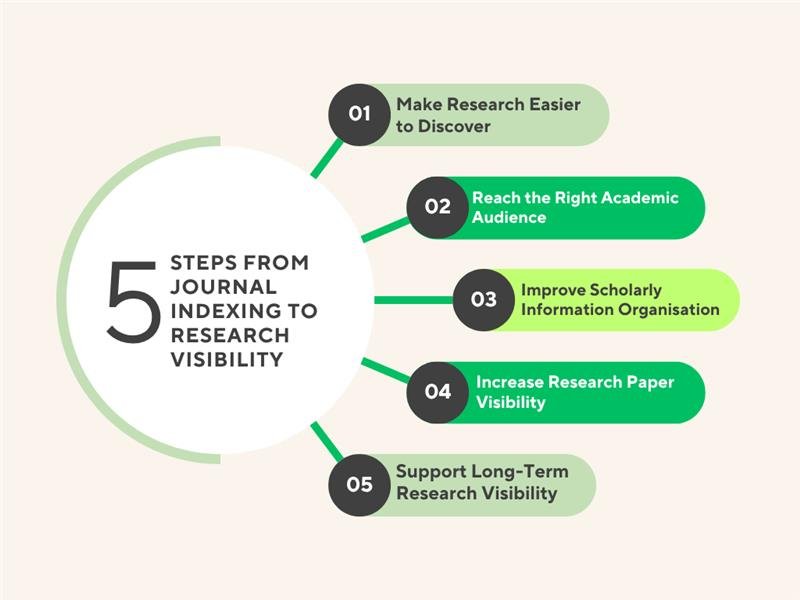
1. Make Research Easier to Discover
2. Reach the Right Academic Audience
3. Improve Scholarly Information Organisation
4. Increase Research Paper Visibility
5. Support Long-Term Research Visibility
Indexing vs. Visibility: Are They the Same Thing?
Indexing Research Visibility Places journal or article information within a database Reflects how easily research can be discovered and accessed Depends on database-specific requirements Can be influenced by indexing, metadata, search optimisation, citations, sharing, and other factors Focuses on structured scholarly discovery Focuses on the reach and discoverability of research Does not guarantee citations Can create more opportunities for reading and citation Does Indexing Increase Citations?
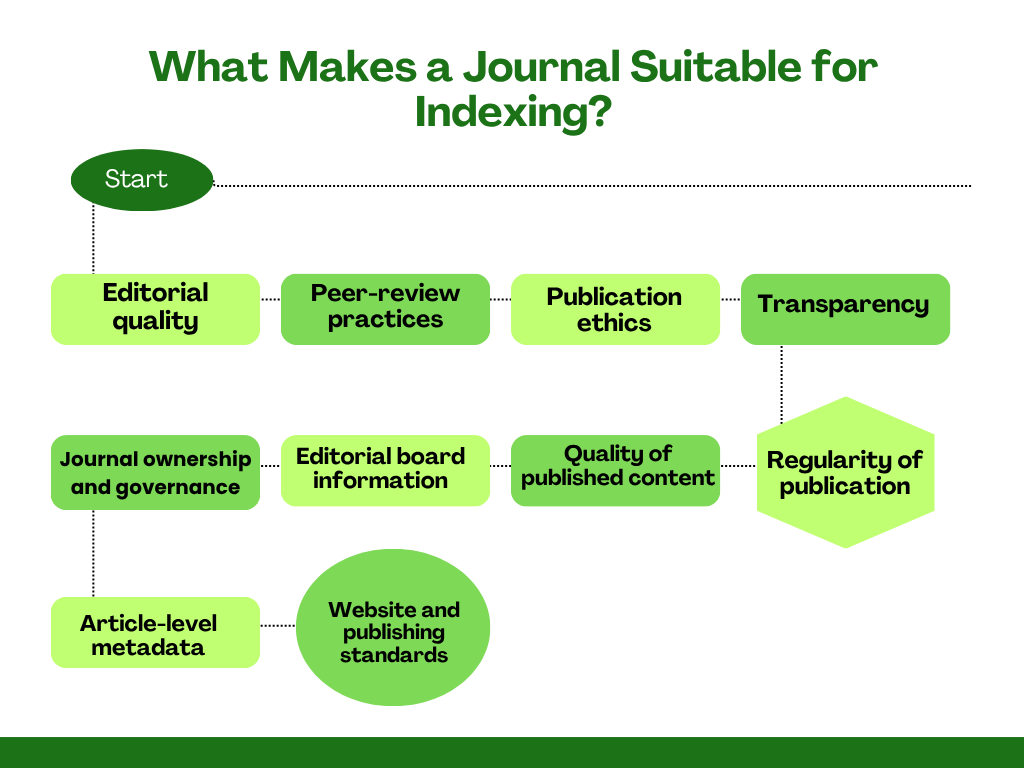
What Makes a Journal Suitable for Indexing?
Indexing and Journal Credibility: What Should Authors Understand?
How Can You Prepare a Journal for Indexing?
Final Thoughts